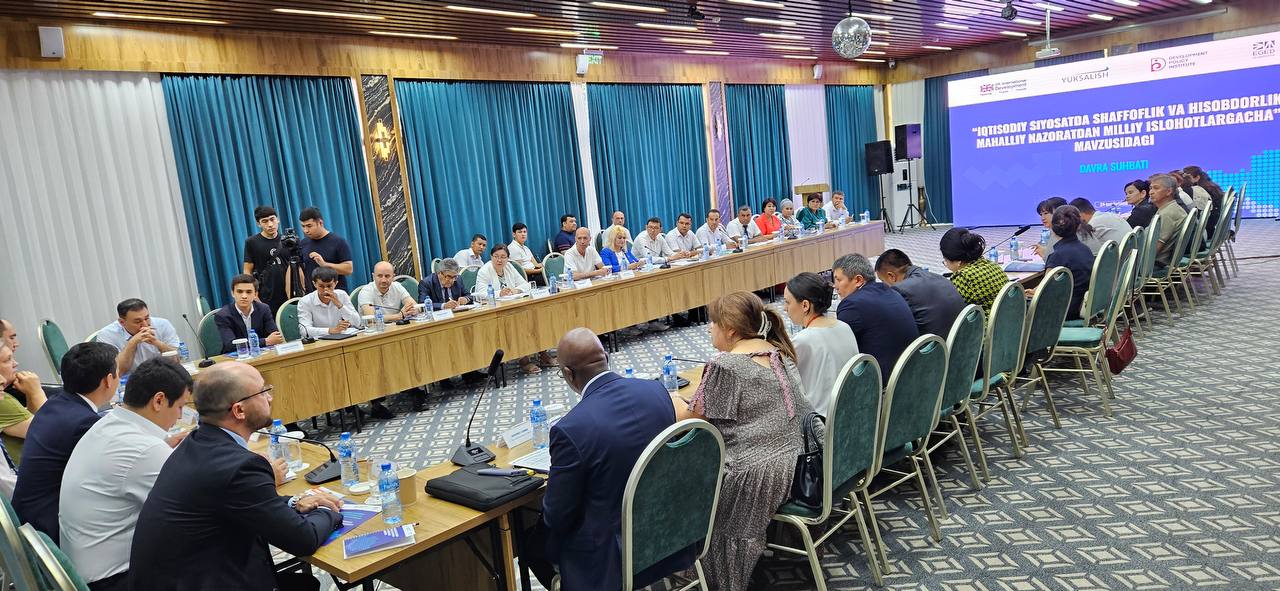



A three-day workshop dedicated to refining the regional “Effective Governance for Economic Development” (EGED) Programme took place on 16–18 July in Bishkek, bringing together participants from Kazakhstan, Kyrgyzstan, Tajikistan and Uzbekistan, including representatives of government institutions, media, the expert community and civil society.
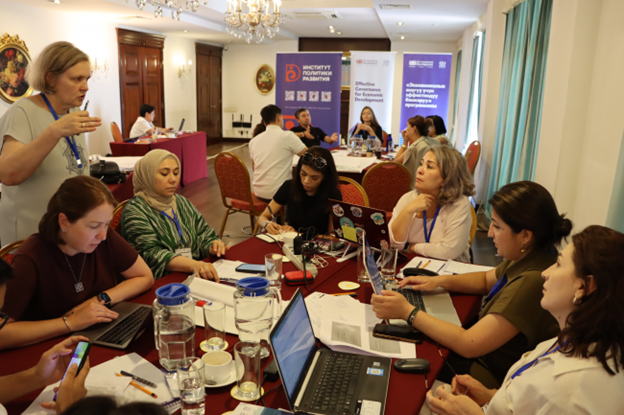
The discussions went far beyond the formal components of the program. Participants examined real challenges, risks, regional dynamics and expectations for change – with a central focus on how to ensure that the UK-funded program delivers tangible benefits for people at the local level.
Opening the workshop, EGED Programme Lead Jafar Usmanov emphasized that “for the UK’s international development efforts, it is essential that Central Asia becomes a prosperous, resilient and open region, where economic reforms truly deliver results on the ground.”
Throughout the sessions, participants explored several key issues, including:
- strengthening transparency and accountability in decision-making and budgeting;
- identifying communication channels that work best in different country contexts;
- ensuring meaningful engagement of local communities in development planning;
- adapting the program to real-world conditions across the region.
During the closing session, Nadezhda Dobretsova, Chair of the Development Policy Institute (DPI), highlighted that “the socio-economic development plans designed during the previous phase have become one of the key tools for investment planning at the local government level in pilot districts of Kyrgyzstan.” The workshop forms part of the co-creation process for the new phase of the EGED Programme, which was launched at DPI in July 2025.