


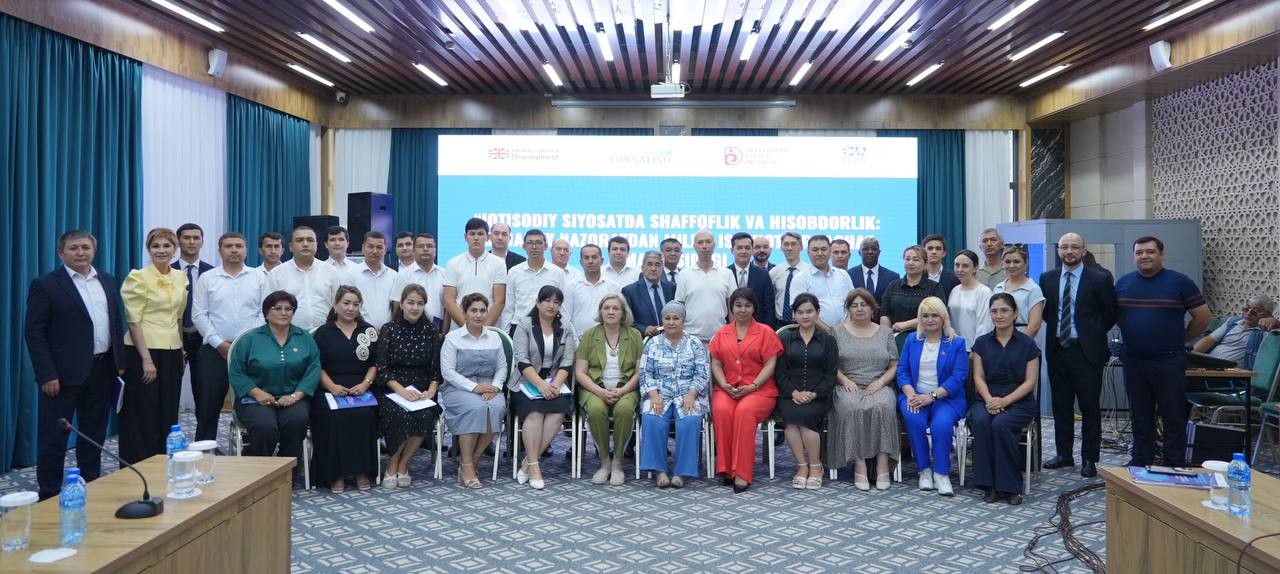
On 24 June 2026, a roundtable titled “Transparency and Accountability in Economic Policy: From Local Monitoring to Systemic Reforms” was held in Tashkent. The event was organised by the Yuksalish Movement under the Economic Governance for Inclusive Development (EGED) Programme, implemented with the support of the UK Foreign, Commonwealth & Development Office (FCDO) in partnership with the Development Policy Institute (DPI). The roundtable brought together representatives of government institutions, civil society organisations, international partners, regional public monitoring groups, and the media.
Opening the event, representatives of FCDO, the Yuksalish Movement, and the Development Policy Institute highlighted that evidence-based policymaking and meaningful citizen engagement are essential for effective public governance.
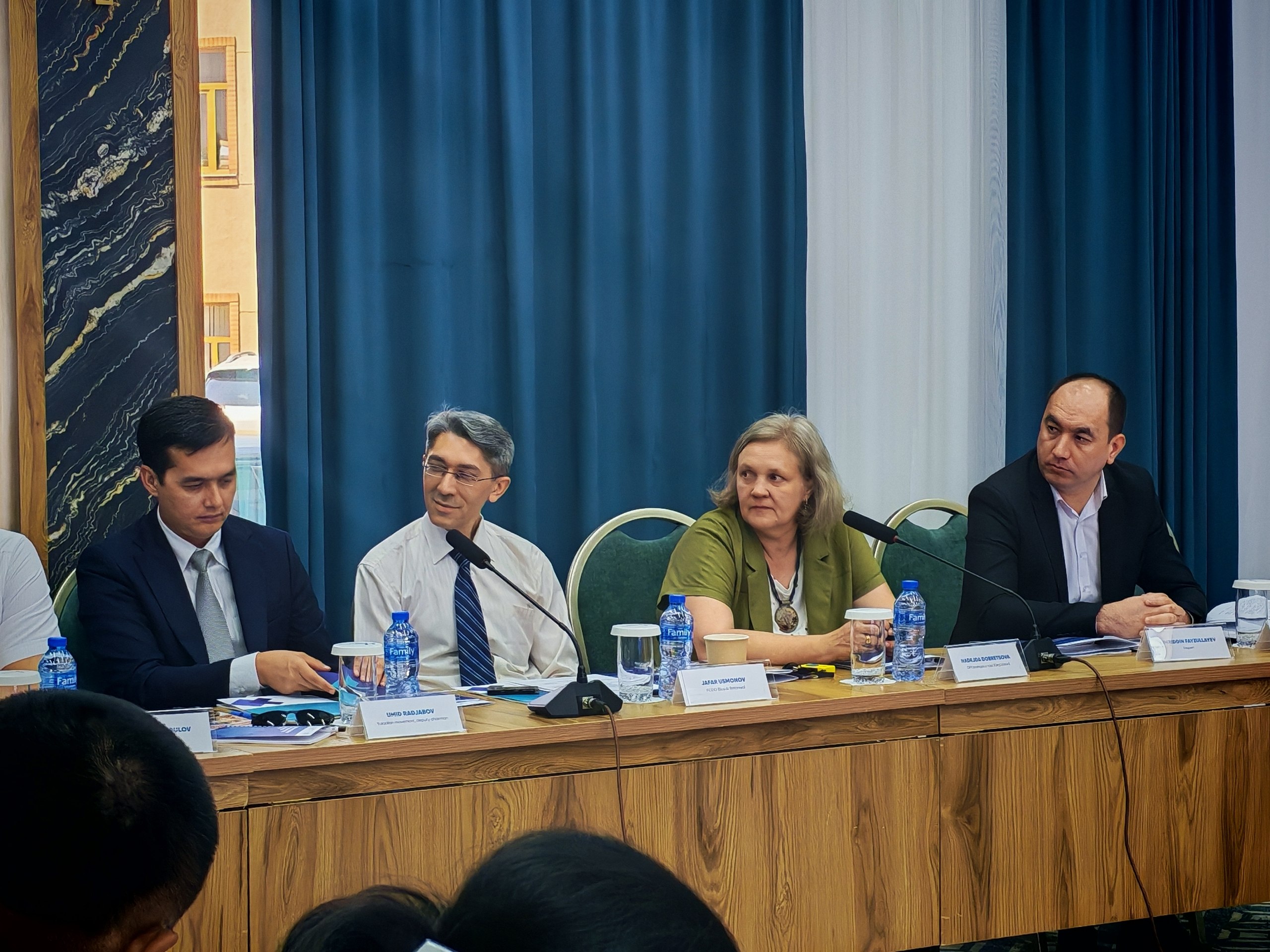
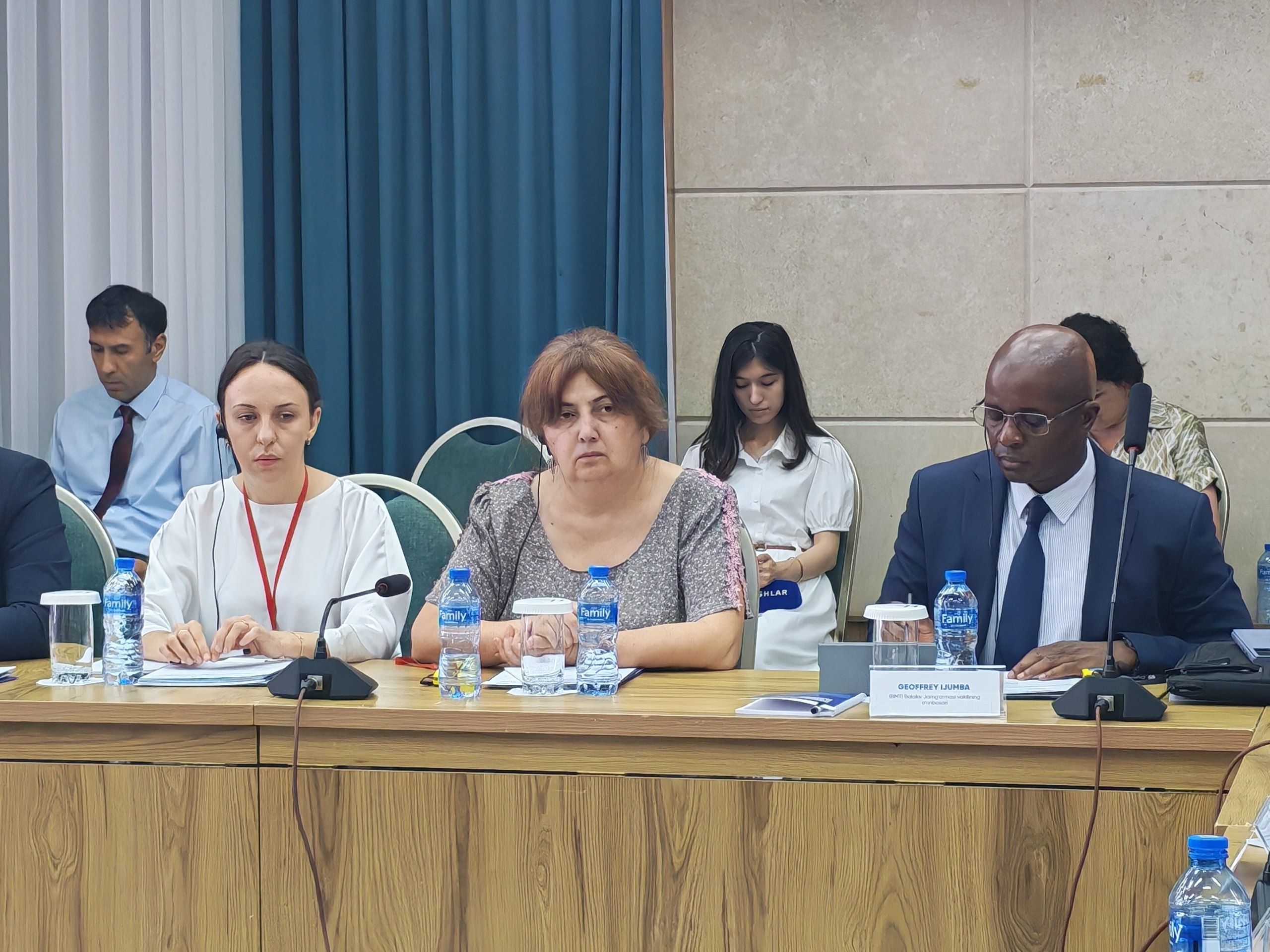
Participants were presented with the results of public monitoring of public-private partnership (PPP) projects and local budget implementation, as well as monitoring methodologies developed for nationwide application. Experts and members of public monitoring groups discussed key challenges identified during fieldwork, including deficiencies in project acceptance procedures, infrastructure defects, lack of transparency in procurement, construction quality issues in Initiative Budget projects, and transparency concerns related to Mahalla Budget funds.
During the first thematic session, PPP experts Mukhriddin Fayzullaev and Shokhjakhon Elmurodov presented the findings of public monitoring of PPP projects. Participants discussed the newly developed monitoring methodology, the results of the legal analysis, identified infrastructure deficiencies, and systemic challenges related to project acceptance and the limited transparency of project implementation. Representatives of the Kashkadarya regional monitoring group shared practical experience from field monitoring.
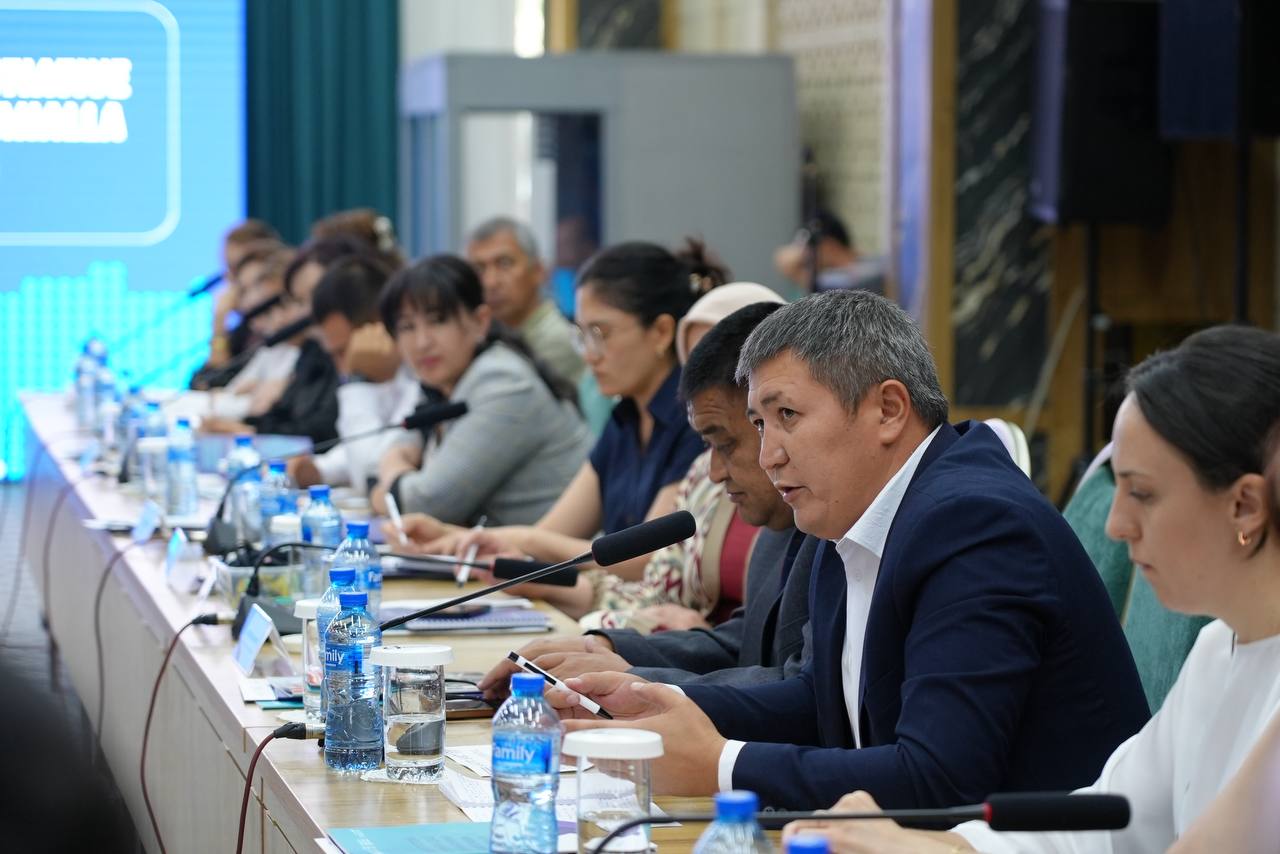
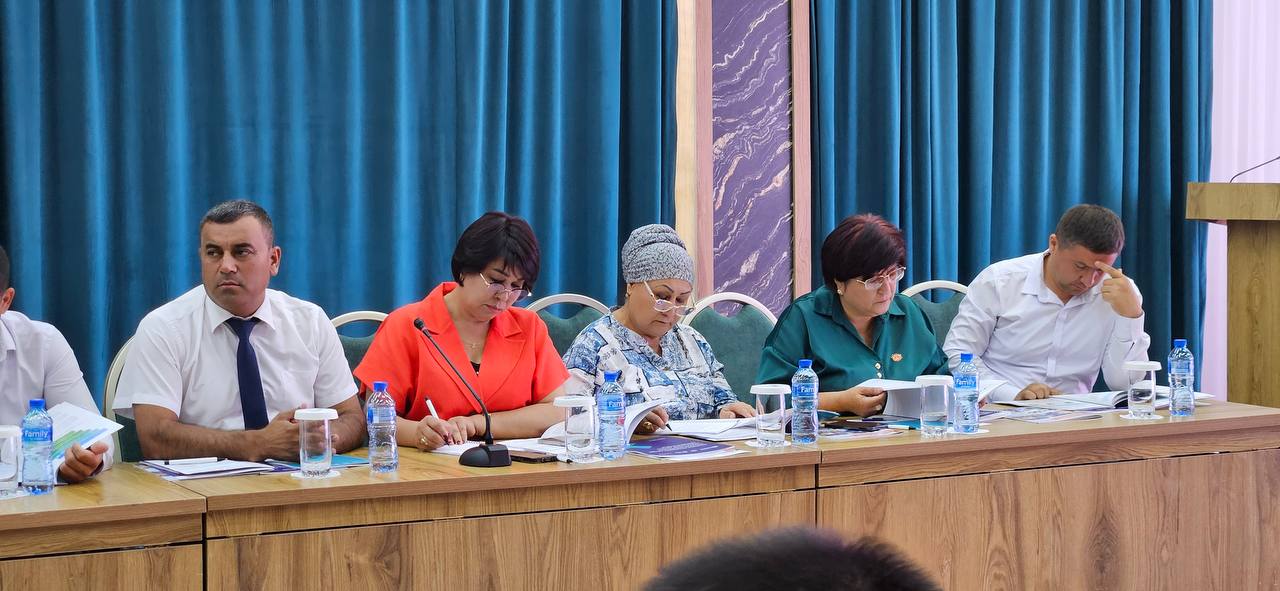
The second session focused on public oversight of local budgets. Participants reviewed the results of field testing of Initiative Budget projects, where public monitoring groups identified issues related to construction quality, project acceptance procedures, and the transparency of Mahalla Budget fund expenditures. Participants noted that regular public monitoring enables early identification of implementation gaps and contributes to more effective use of public resources.
Particular attention was given to practical measures for strengthening transparency in economic governance. Key recommendations included introducing a mandatory Independent Public Monitoring Report on the Openbudget.uz portal, increasing transparency of PPP contracts, and improving government responsiveness to recommendations submitted by citizens and public monitoring groups.
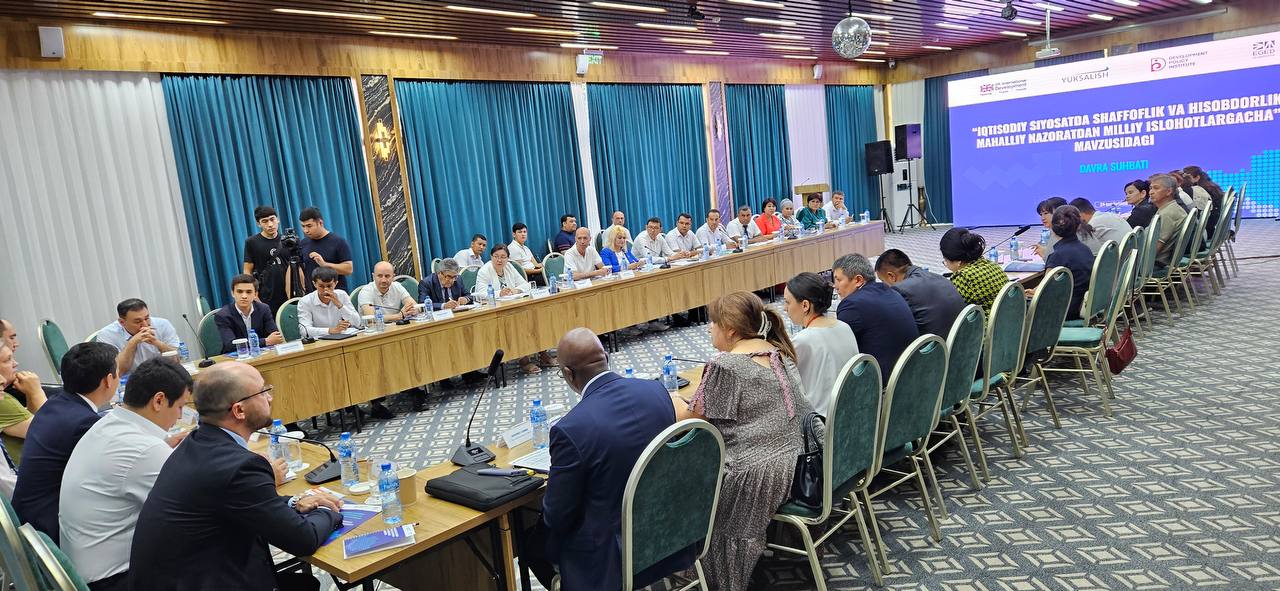
“Public monitoring should become not a one-off initiative, but a sustainable mechanism for improving public policy and strengthening citizens’ trust in decision-making” was one of the key messages emerging from the discussion.
The roundtable concluded with a set of recommendations aimed at improving legislation and public oversight practices. Among the priority proposals were the introduction of the Independent Public Monitoring Report on Openbudget.uz, enhanced transparency of PPP contracts, and stronger government engagement with citizen-led initiatives.