

- Главная
- »
- Узбекистан
Labour Code
EGED Programme provided the baseline data collected on the labour market, including data on discrimination against women.
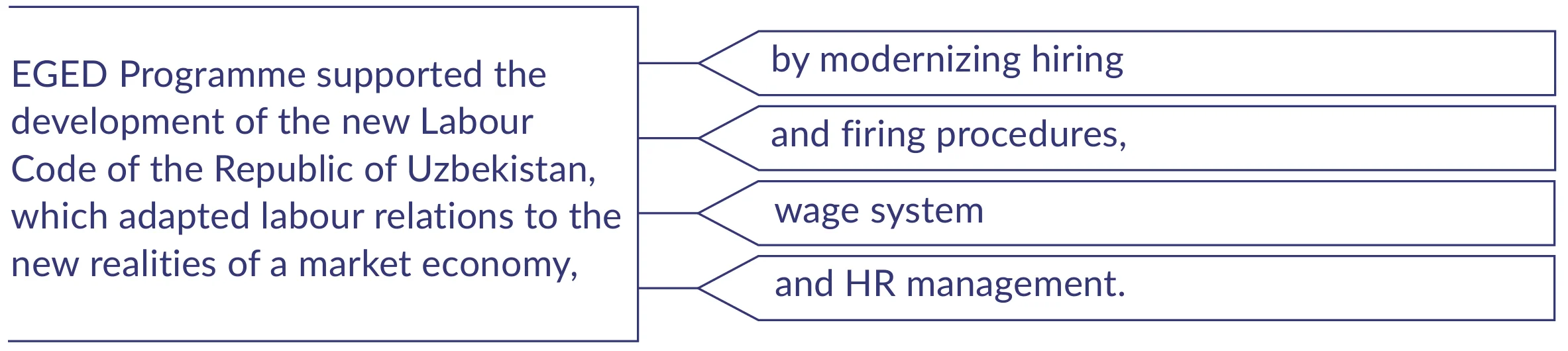
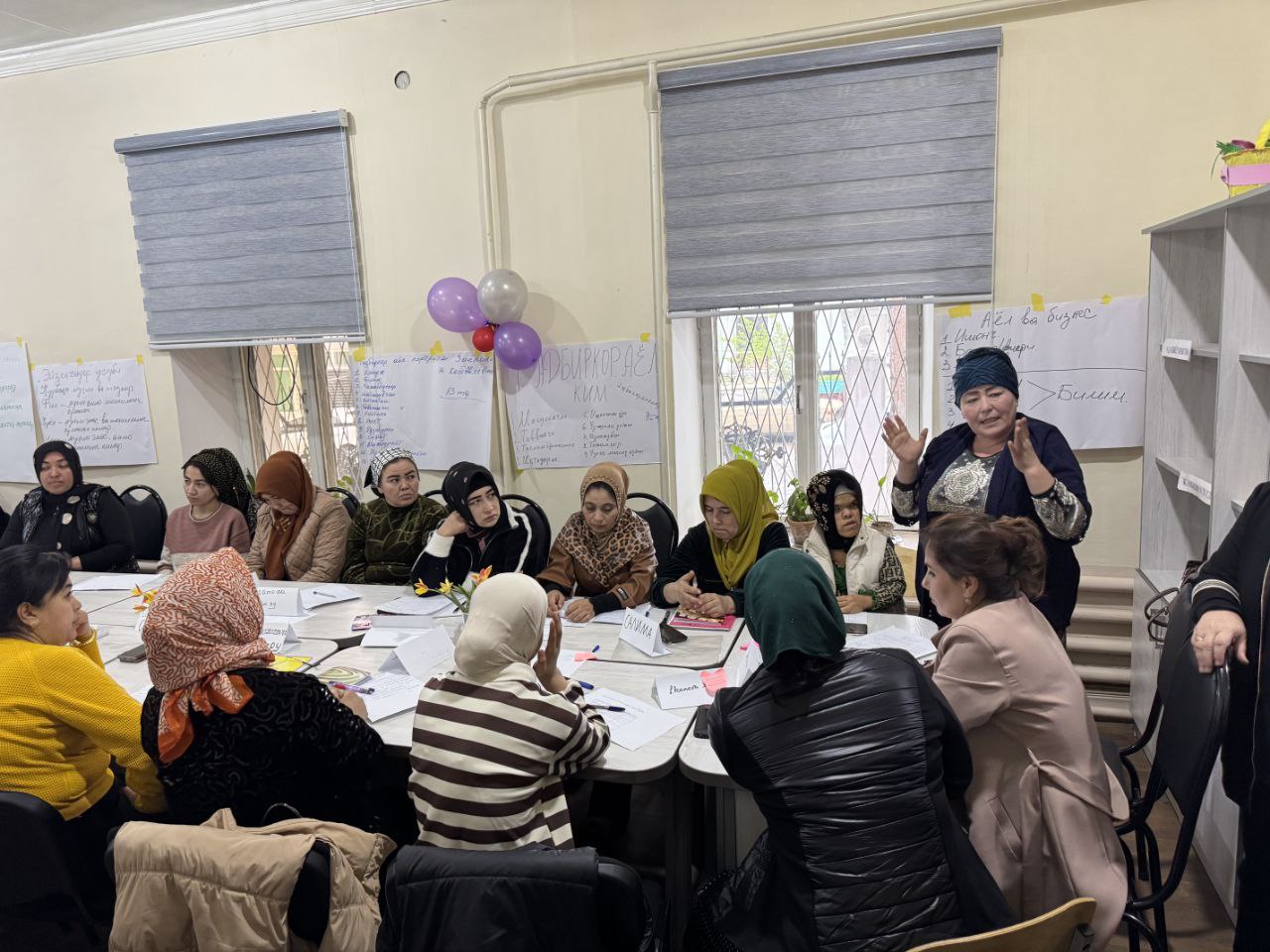
EGED Programme facilitated discussions on the draft Code with civil society representatives, whose proposals were integrated into the final version of the Code, including proposals on the rights of vulnerable women and persons with disabilities. Strengthening accountability The development of the feedback platform between the Government and the Civil Alliance, the group of 22 experts (50% women, including youth and residents of the regions), has been an outstanding achievement in the area of Labour Code enforcement. The objective of the Alliance is to effectively communicate with the Government and report any violations of the Code.
3 monitoring projects on labour rights and legislation have been conducted and submitted to the Government.
Green Growth Strategic Planning
EGED Programme supports the implementation of the long-term strategy of the Government of the Republic of Uzbekistan on green growth agenda

Including awareness raising and capacity building of the governmental bodies through an ongoing series of trainings, hiring of in-house expert and undertaking of institutional assessment of the current status and gaps in the area of climate change. Proposals brought by EGED Programme were highly appreciated by the Government and incorporated into the long-term green growth strategy.
Developing coalitions and dialogue 12 civil society organizations were brought together into a network and trained by EGED Programme to strengthen the capacity of civil society (media, private sector and business associations active in biodiversity and environmental issues) to contribute to dialogue, advocacy and monitoring of decarbonization reforms.
Public Procurement Strengthening Accountability
In the area of public procurement management, EGED Programme supported the development of the grievance module that enabled users to communicate with the Government and provide feedback to improve the efficiency and equitable nature of public procurement.

The Public Procurement Strategy, finalized with EGED Programme support, establishes the foundation for more transparent, inclusive ( which includes people with disabilities) and efficient procurement. Both of these reforms demonstrate signs of openness to civil society and the private sector. EGED Programme has helped to set up a procurement monitoring group to build a community that can ultimately find opportunities to drive changes.
The EGED programme conducted training for the media in data journalism, as a result of which analytical and data materials on the effectiveness of public procurement appeared in the media space of Uzbekistan. Increased transparency in the public procurement process counters corruption and helps save public finances
E-commerce
E-commerce has become a priority area of EGED Programme to respond to a priority need of the Government of Uzbekistan, since the country's expenditures on digital technologies are relatively low. Hence there are opportunities for rapid growth.
E-commerce will help to empower the private sector and streamline the flow of goods and services. EGED Programme conducted the diagnostics of the current state of e-commerce in the region, which led to the development of the Support Roadmap, detailed down to the district level, as well as a guide for implementation. E-commerce is a vast area of the economy with multiple entry points for government-owned enterprises, which is expected to emerge as an area with high-added value potential.
Listening to the Citizens of Uzbekistan Survey
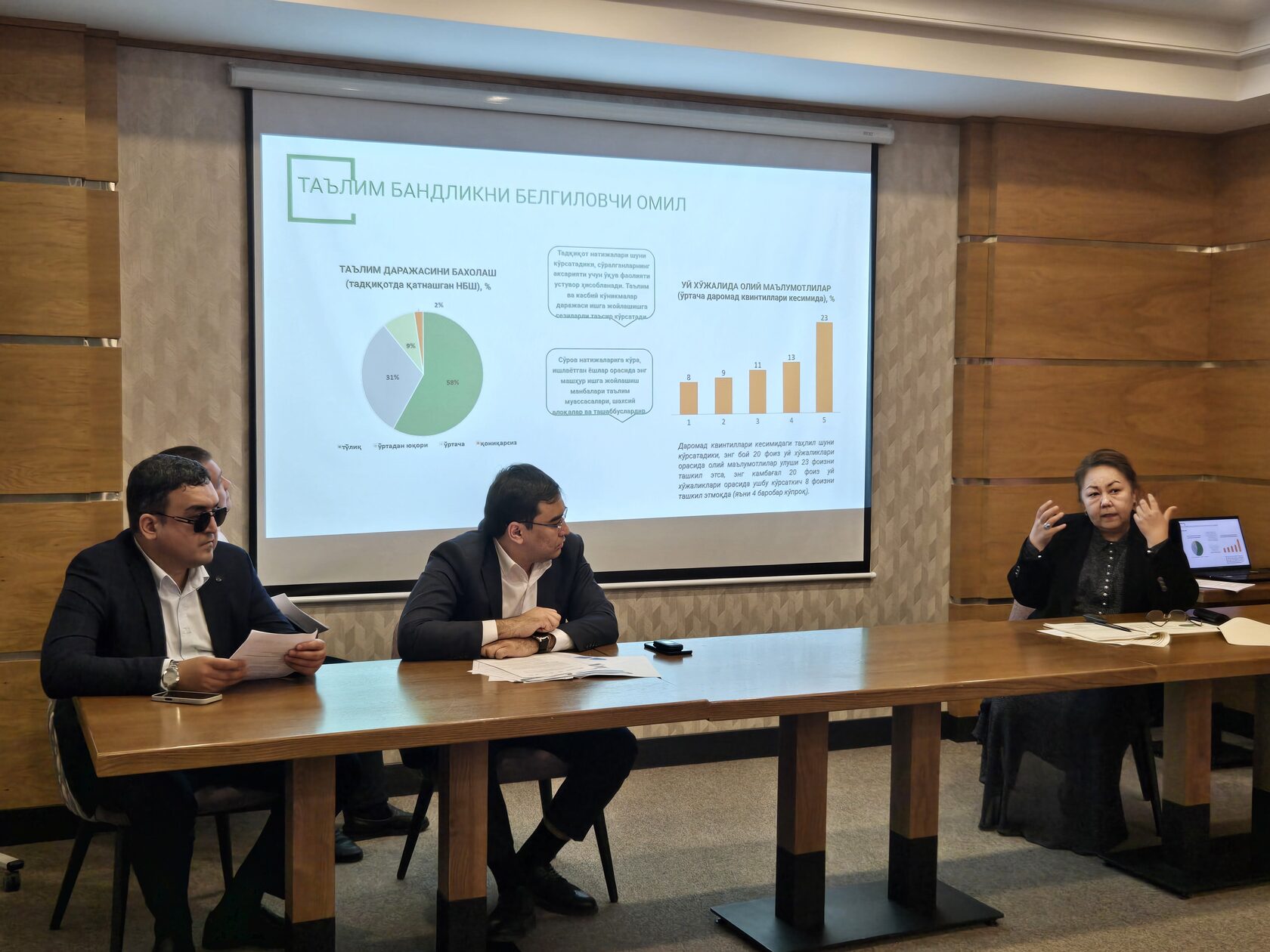
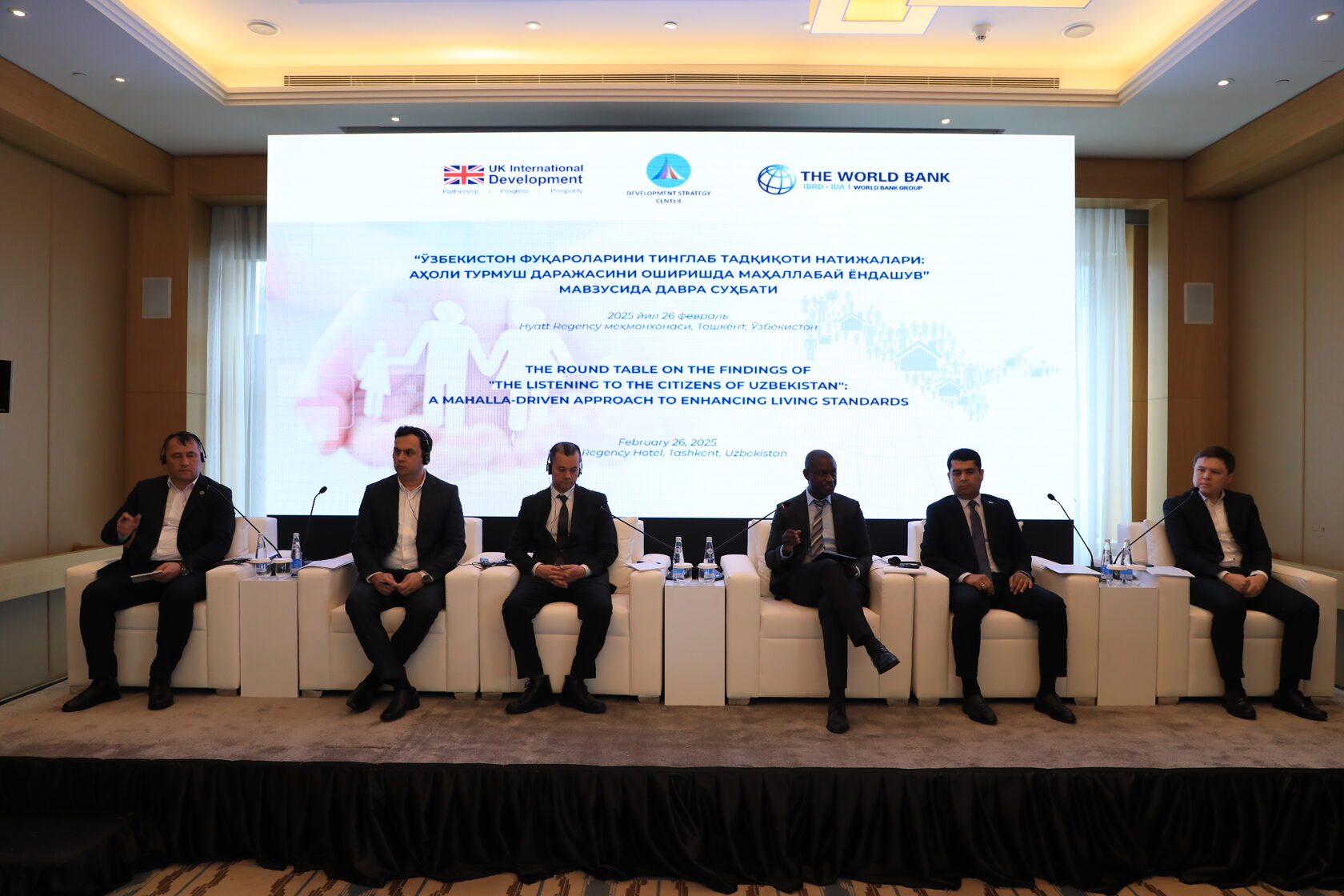
EGED Programme helped to organize the Listening to Citizens of Uzbekistan survey (L2CU1), which is a nationwide representative survey of citizens' opinions about their well-being and the impact of government policy reform on their lives, conducted on a monthly basis.
1,500 people are surveyed each month The EGED Programme has provided opportunities to use and incorporate this data into public discussions with the Government, for example, on school meals. The survey data was also used in the development of the new Labour Code of the Republic of Uzbekistan. The EGED Programme also supports the Makhalla Index, a study conducted by the World Bank in cooperation with the Government of the Republic of Uzbekistan, which produces a district-level (makhalla-level) employment and
Pillar 1
National Statistical Committee
National Bank of the Kyrgyz Republic
Pillar 2
(2021 — 2024)
(2024 — 2025,)
Beneficiary partners:
|
Implementor
|
Contacts
|
|---|---|
|
FCDO |
Samira Abdusalomova |
|
The World Bank |
Marco Mantovanelli, |